
Staging a Home Office That Buyers Actually Want
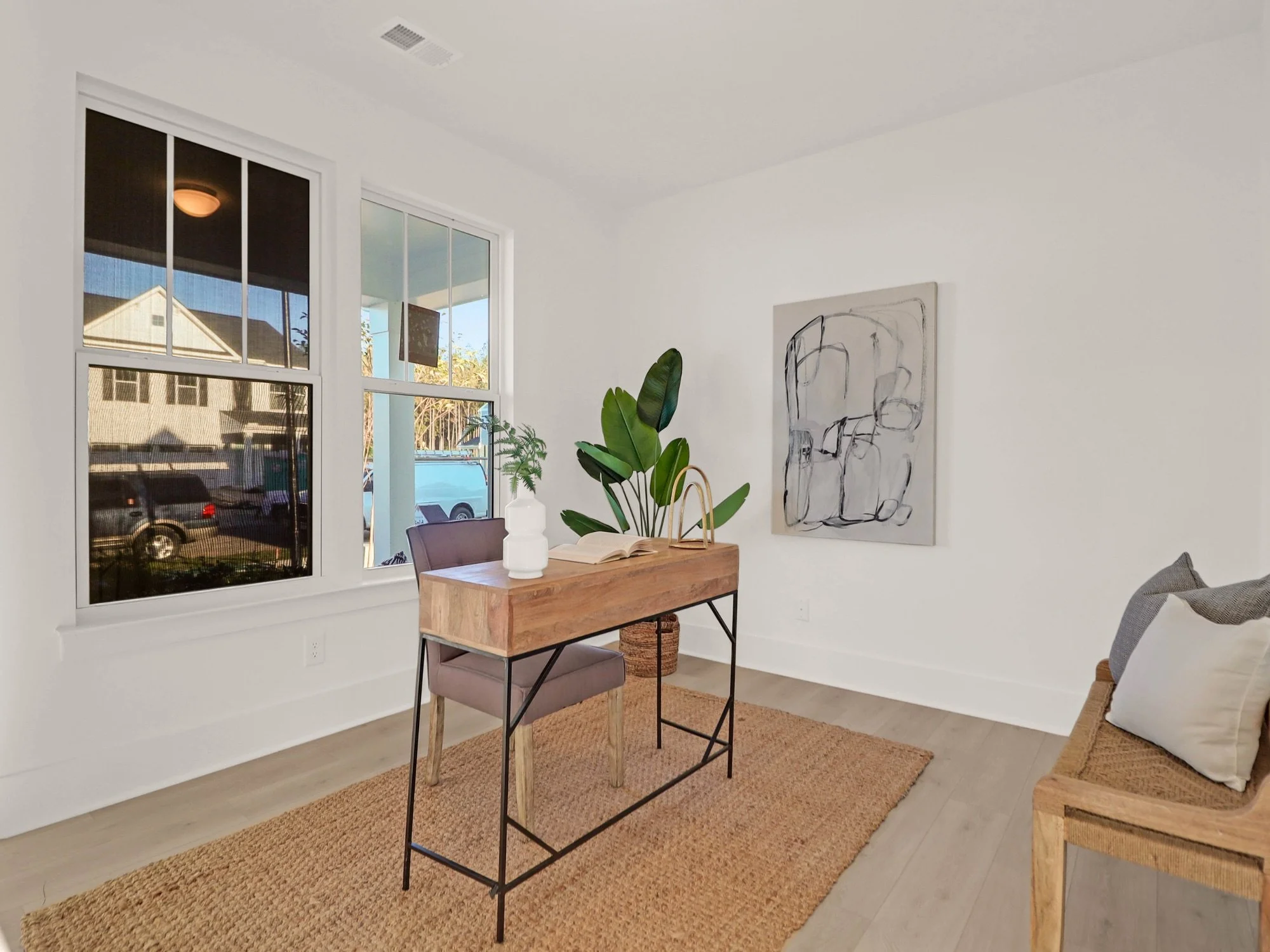
Staging a home office shows buyers your house can handle both their personal and work life. Not everyone needs a dedicated office, but a lot of people do. Things like remote work, side gigs, helping kids with homework, paying bills without taking over the kitchen table, and more.
If your office looks like you shoved a desk into a storage closet, buyers start wondering if the space really works. Clean it up, make it usable and they can see themselves using it.
Key Takeaways
Pick a spot with a door or natural separation from the rest of the house
Clear the clutter and hide those cords (seriously, bundle them up)
Use good lighting (overhead, desk lamp, and natural light if you've got it)
Keep the desk simply styled (lamp, plant, notebook - that's it)
Pick neutral, light paint colors that don't make the room feel like a cave
Why Home Office Staging Helps Homes Sell
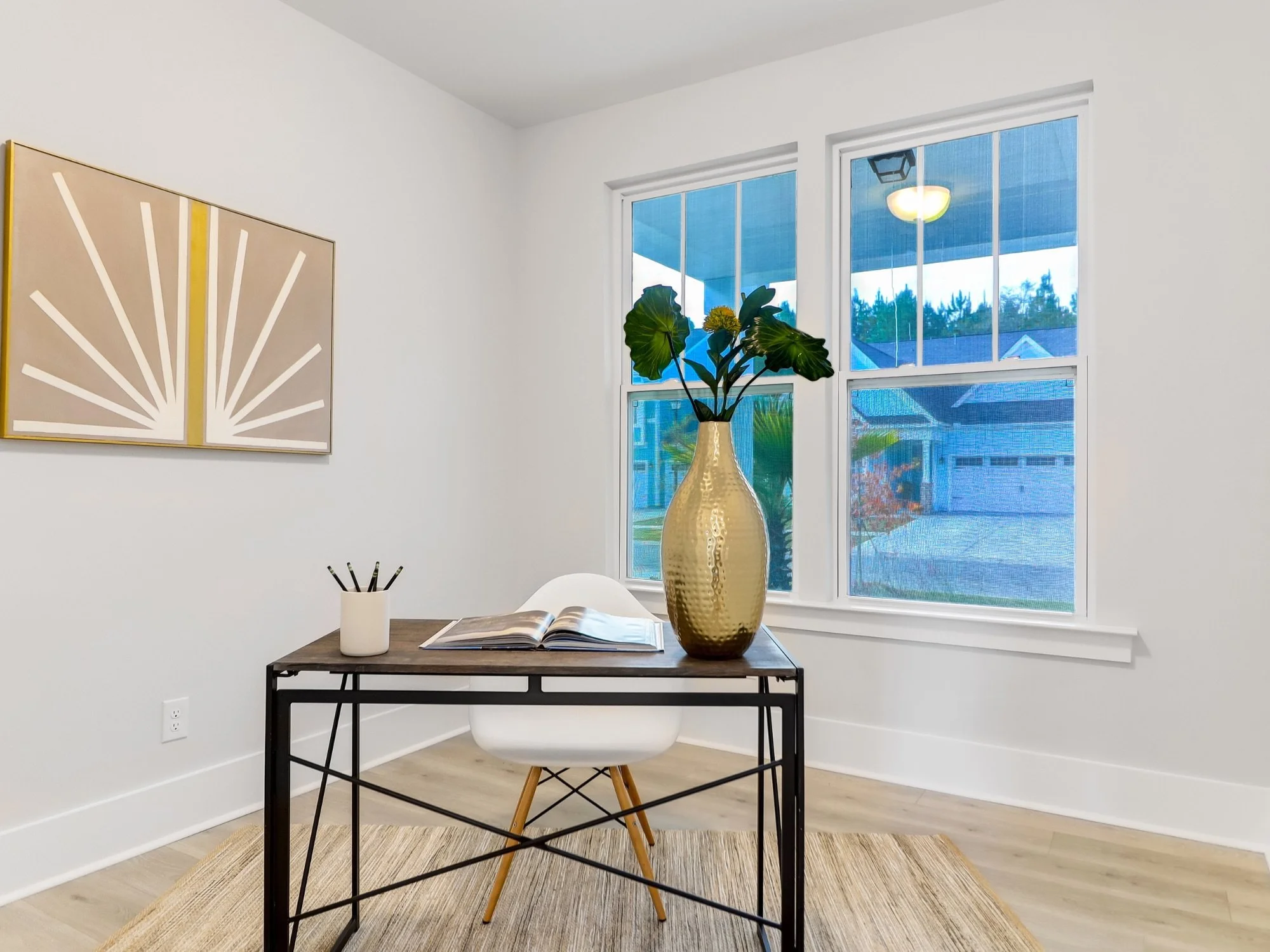
Buyers don't just want to hear "you could put a desk in that extra bedroom." They want to see it. A staged office proves the space works for remote work, freelancing, kids' homework, and household management.
It also solves the "what do I do with this weird room" problem. That awkward loft? Stage it as an office. The spare bedroom no one knows how to use? Office. The landing at the top of the stairs? Mini office nook. Staging clarifies the space and helps buyers picture how they'd actually use it.
Pick the Best Spot for Your Home Office
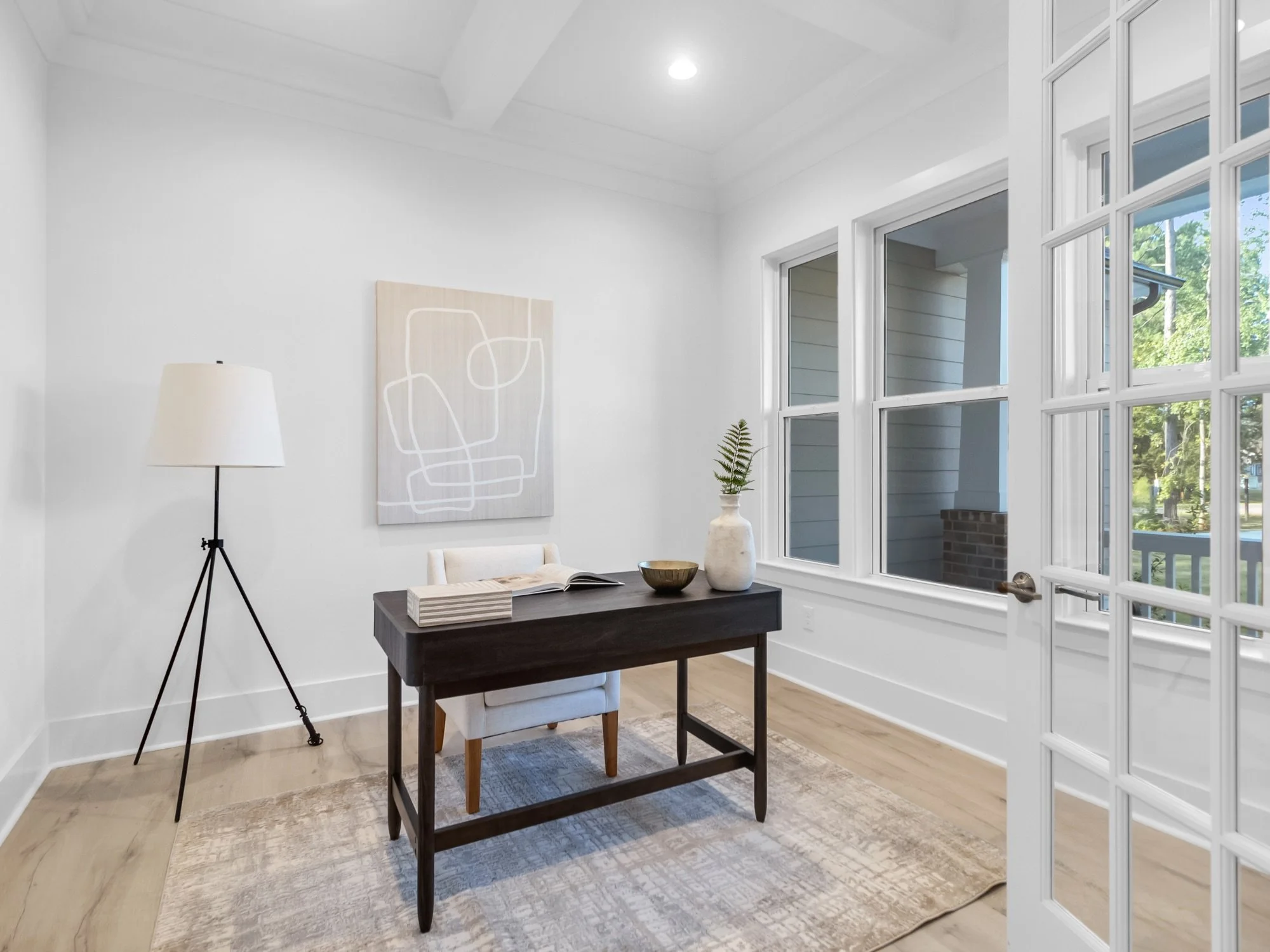
Not all office locations are created equal. Buyers want a space that feels separate from the chaos of daily life.
The best spots? A spare bedroom with a door wins every time. Privacy helps when you're on calls or need to focus. Lofts and bonus rooms can work if they're not in the middle of all the household traffic. Flex rooms are solid too, as long as they're not dead center where everyone's always walking through.
What you want to avoid - setting up right next to the kitchen where lunch prep gets loud, open hallways where everyone walks past constantly, or dark corners with zero natural light. And if a room is trying to be an office, gym, and playroom all at once? Pick one.
Got an awkward loft, landing, or nook? Toss down an area rug, add a small desk and decent lighting, and buyers can suddenly see how they'd use that weird space.
Clear Out the Clutter First
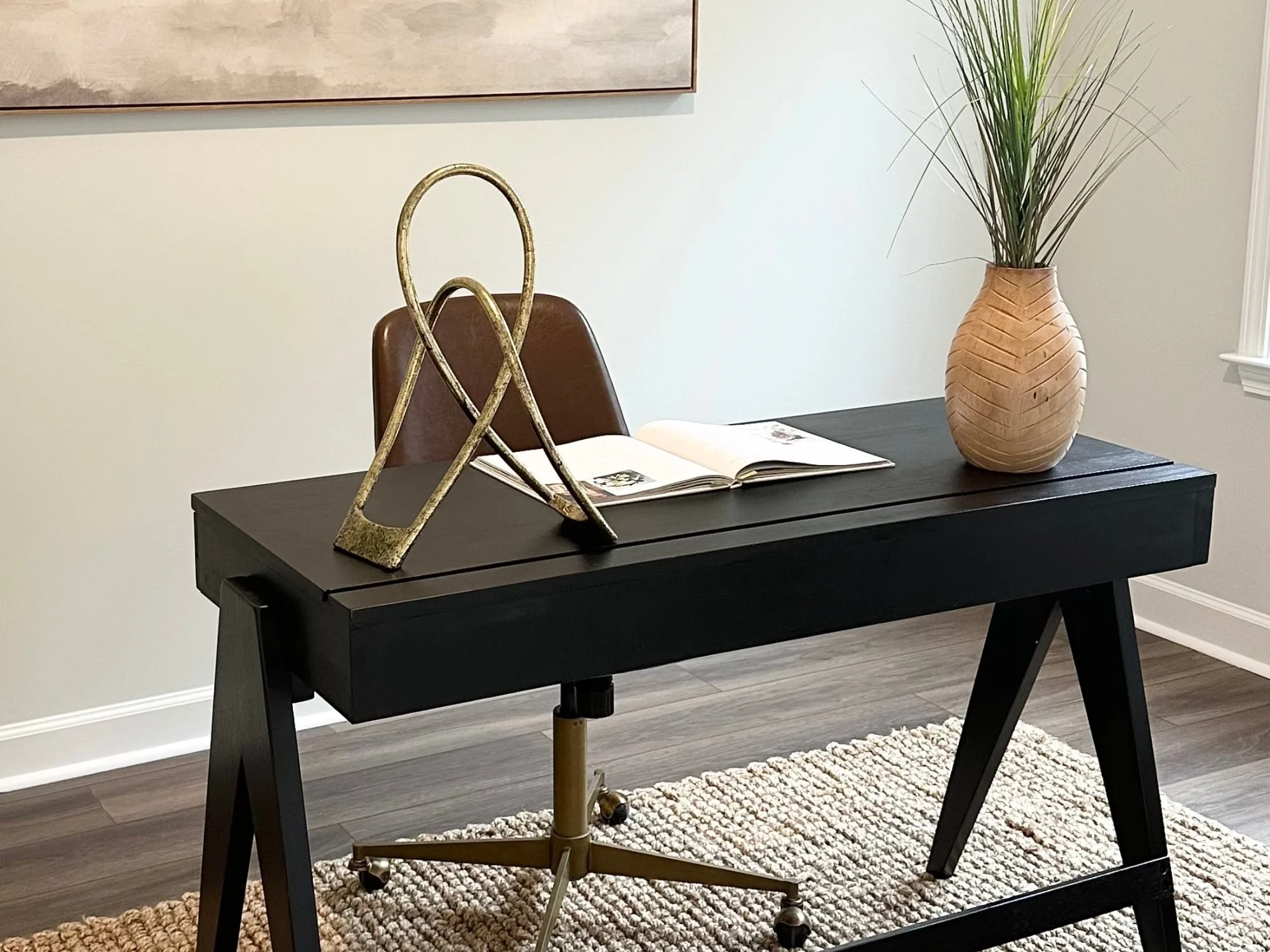
Before you stage anything, you need to declutter. Home offices collect stuff fast.
What to remove - piles of paper, old mail, receipts, extra equipment like old printers and monitors and chargers you don't use anymore, craft supplies, tax documents, client files, and any personal paperwork with your name visible. Diplomas with full names and family photos should go too.
What can stay - your desk, chair, maybe a small bookshelf, a laptop or monitor (one, not three), and some simple desk accessories we'll talk about in a minute.
You want the room to look like someone could sit down and get work done, not like you just finished filing six months of receipts.
The Desk and Chair Matter
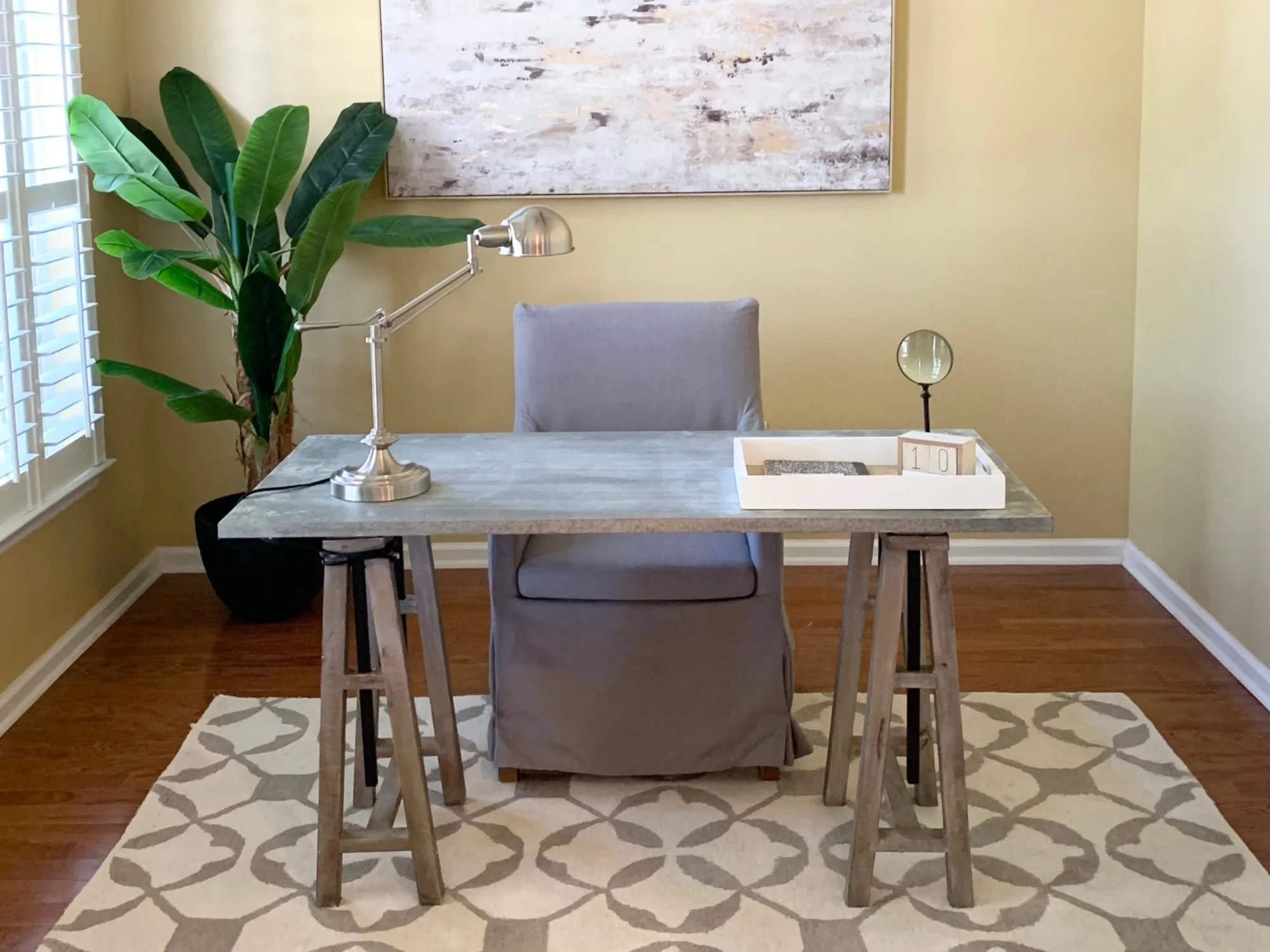
Your desk setup is what buyers focus on first.
Pick a desk that fits the room. Too small looks like a homework table. Too big swallows the space. If you've got windows, face the desk toward them. And check what's behind the desk in photos - a messy closet or blank wall doesn't help.
For the chair, go simple and comfortable-looking. Skip the worn-out office chair with the ripped armrest or the massive gaming chair that screams, "I live here 16 hours a day." Make sure it's pulled in neatly, not shoved halfway across the room like you just evacuated.
If the desk feels too big for the space or the chair looks like it's seen better days, swap them out. This is one place where the right furniture makes a huge visual difference.
Home Office Furniture Layout
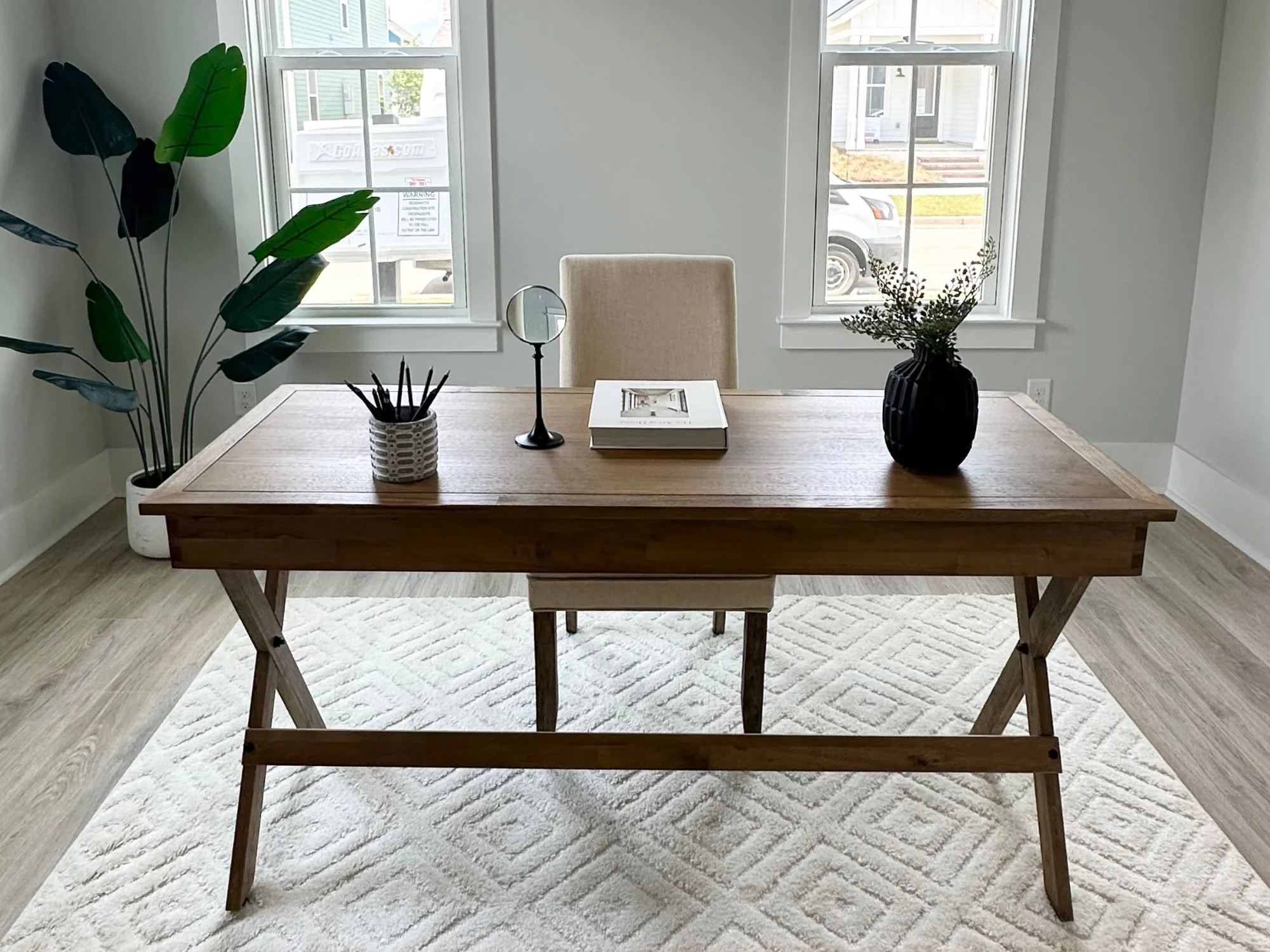
You need enough space to move around comfortably. Buyers shouldn't feel like they're squeezing past furniture to get to the desk.
Leave clear walkways around the desk area. If the office is in a bedroom, determine what the room is actually used for. Bedroom with a desk corner? An office that can sleep a guest? You can't have it both ways without it looking cramped. Use an area rug to define the office zone in open or multi-use spaces, and whatever you do, don't block windows or natural light with tall furniture.
If you're staging a bedroom as an office or vice versa, commit to one primary function. A room that's trying to be three things at once just looks messy and confusing.
Hide Those Cords and Tech
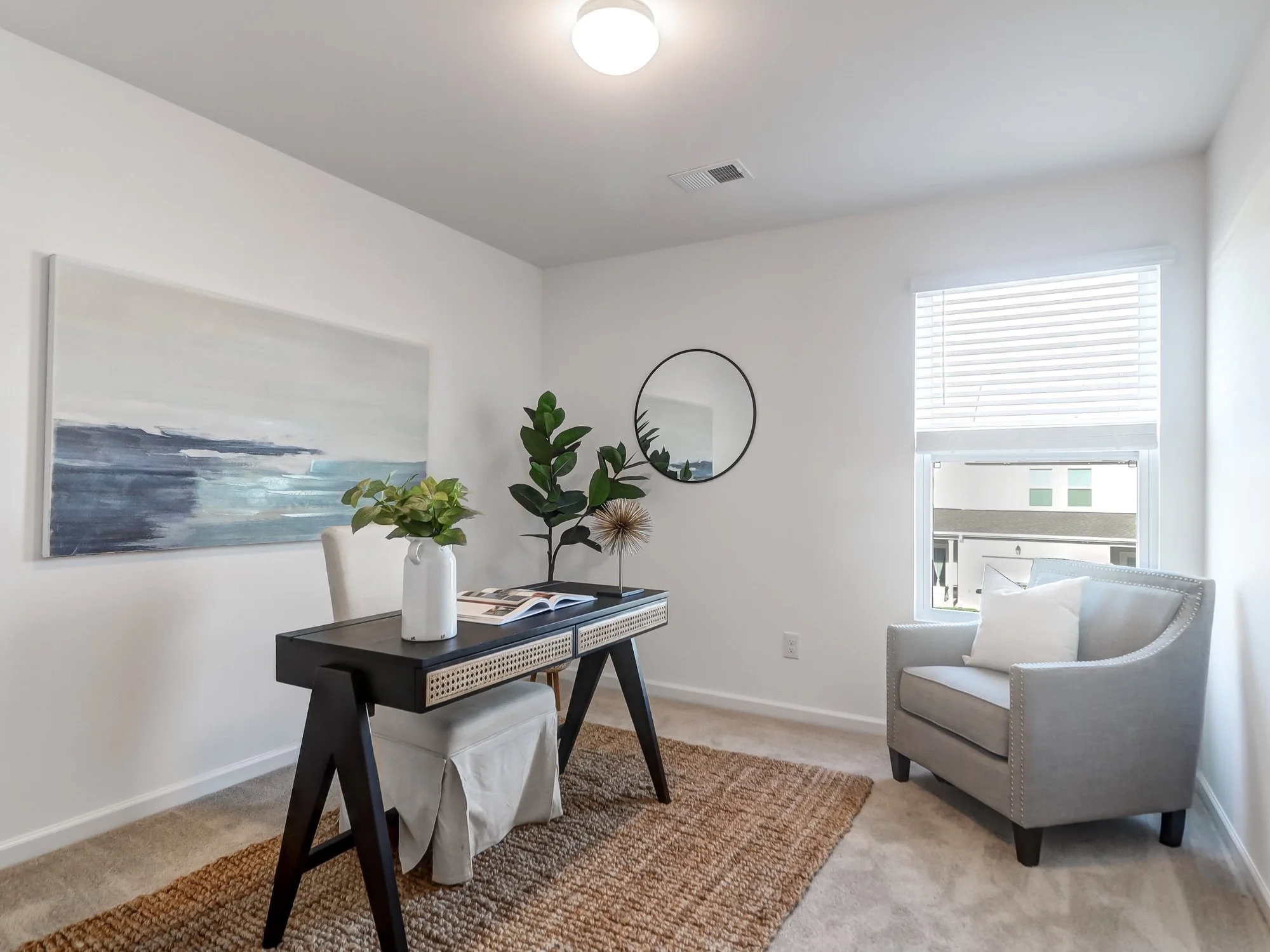
Nothing kills the vibe of a clean office faster than a tangle of cords everywhere.
Bundle them with zip ties or cable sleeves. Run them behind the desk or along the baseboard where they're not the first thing you see. Use a power strip tucked out of sight instead of one sitting in the middle of the floor. Buyers absolutely notice tangled cords. Spend a few minutes bundling them and the whole room looks cleaner. Hide the visible tech too. One laptop or monitor is fine, but three monitors and a printer taking over the desk is overkill and it starts to look like NASA space station.
Styling Your Desk and Shelves
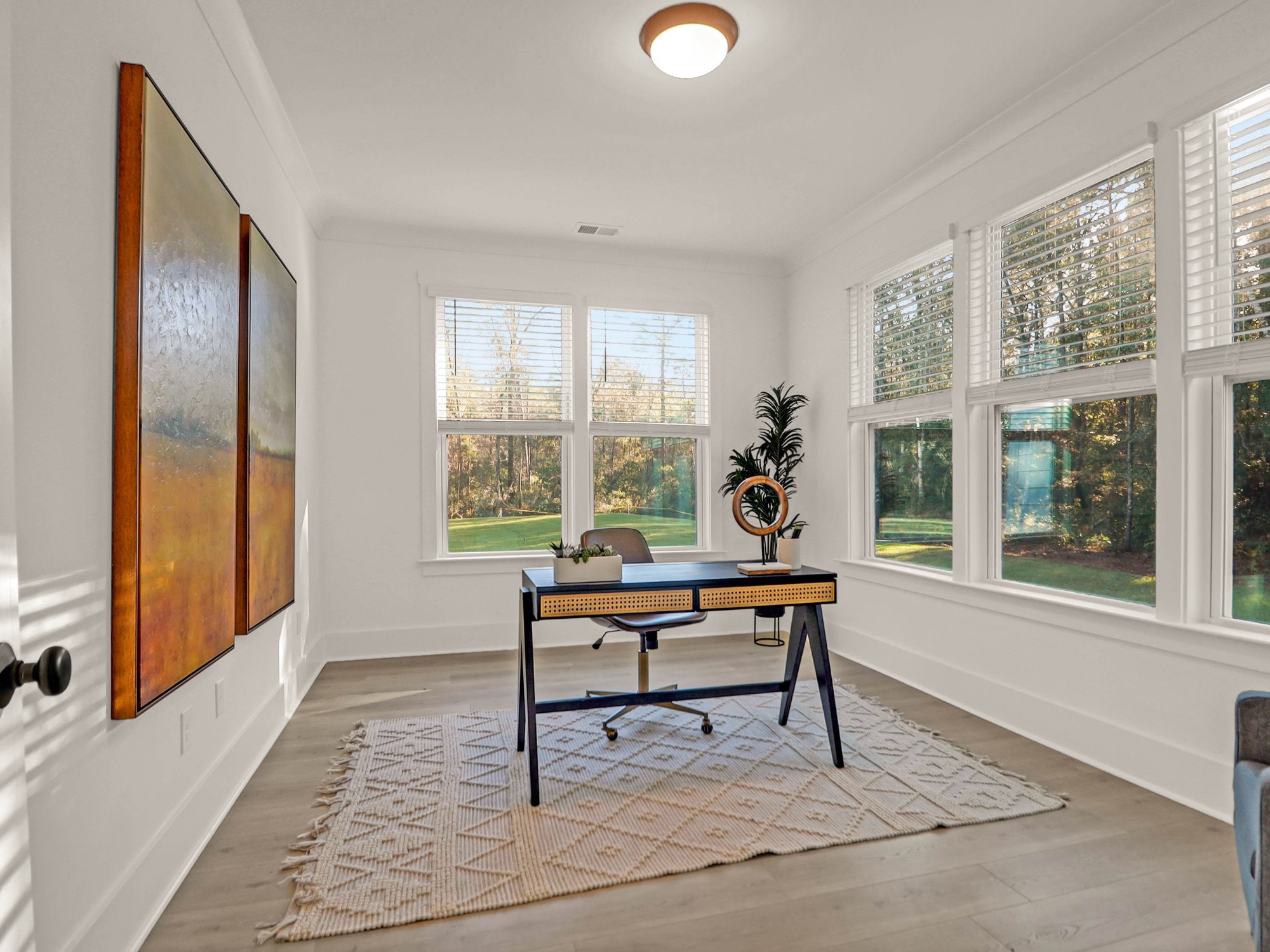
Keep it simple. You want the desk to look functional and clean, not like a Pinterest board exploded.
Here's what works on a desk: a lamp (good lighting is key), a small plant or some greenery, a notebook or stack of books, and maybe one neat tray for pens and small items. That's it. No piles of stuff, no 47 sticky notes, no chargers snaking across the surface.
For bookshelves, mix books with a few decor items like a small plant or simple frame. Don't overstuff the shelves - nobody's impressed by how many books you own. Use closed storage like boxes or baskets to hide the visual clutter.
The goal is "neatly productive," not "I'm drowning in work."
Home Office Lighting That Actually Works
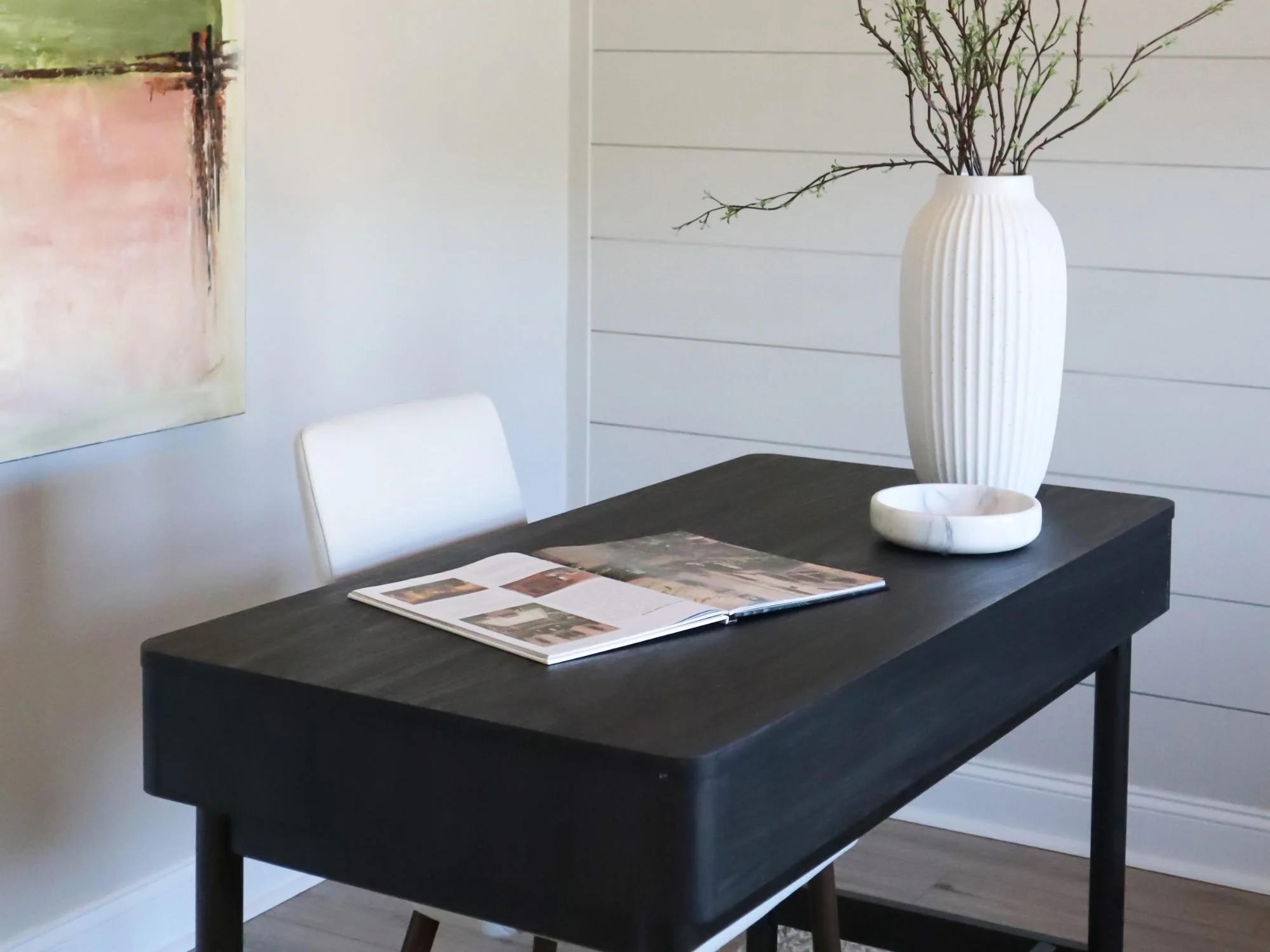
Dark offices are depressing. Buyers want a space that feels energizing, not like they're working in a basement.
Open those blinds and curtains all the way. Use layered lighting - overhead light, a desk lamp, maybe a floor lamp in the corner if the room still feels dim. Make sure all the bulbs work and they're the same warm temperature (mismatched bulbs look weird). And give your light fixtures a quick wipe down - you'd be surprised how much dust kills the light.
Natural light is huge. If you've got windows, show them off. If the room is naturally dark, add more lamps and use brighter bulbs.
Home Office Paint Colors
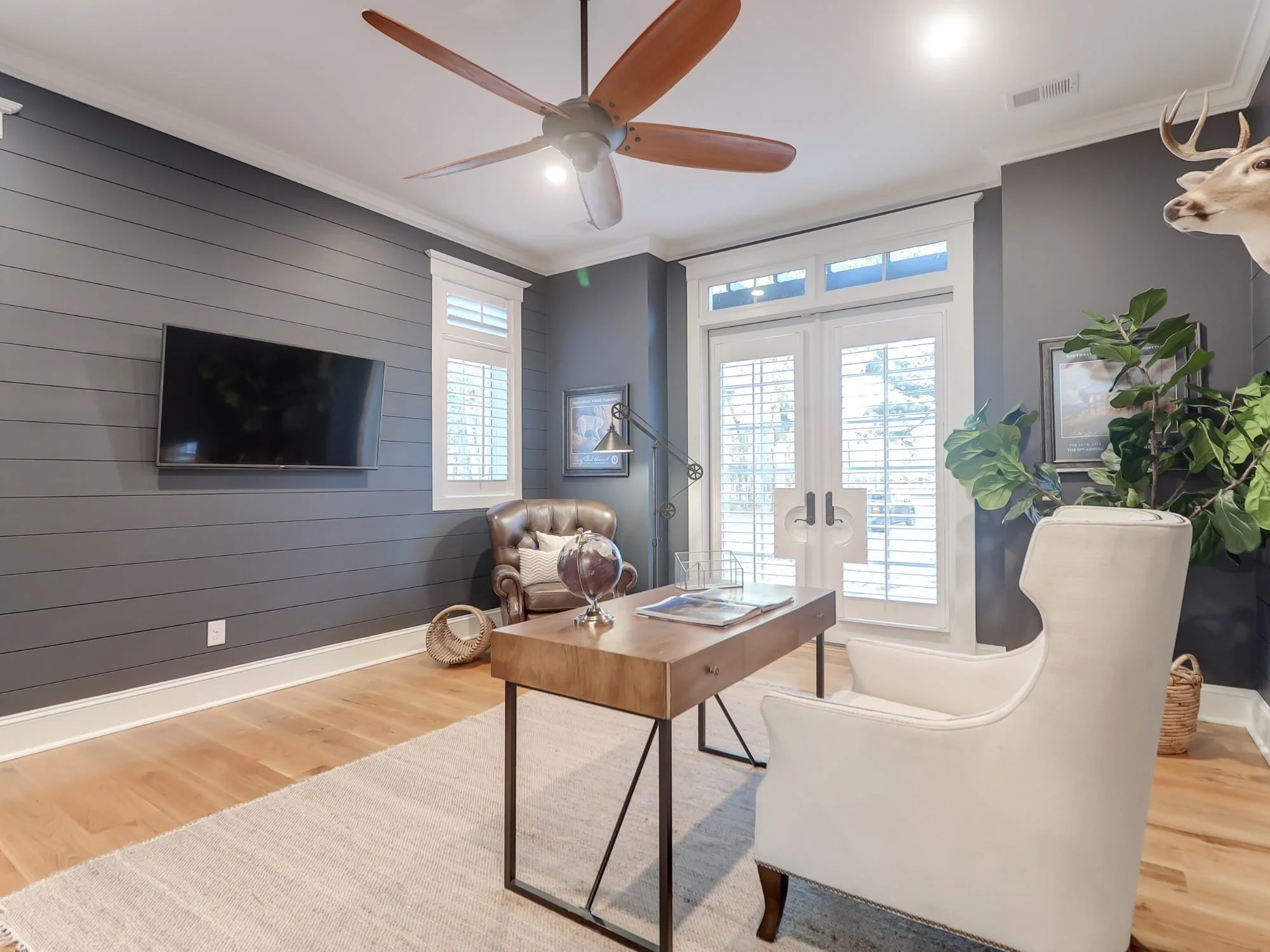
Paint can make or break how the office feels. Buyers want calm, productive spaces, not something that feels like a cave or a kindergarten classroom.
Soft whites work great - warm ones, not that stark hospital white. Light grays or greiges are solid. Warm beiges and creams feel professional without being boring. Muted blues or greens can work too if you want something slightly more interesting, as long as they're calm and not screaming at you.
Skip the dark colors that make the room feel tiny. Bold or intense colors are distracting when you're trying to work. And anything too personal or polarizing (like bright orange or deep purple) is a hard pass.
If your walls are currently bright red or dark navy, it's worth repainting. Light, neutral colors make the space feel bigger and more versatile. For more on why neutrals work, check out our post on staging with neutral colors.
Multi-Use Rooms (Guest Room + Office, Bedroom + Office)
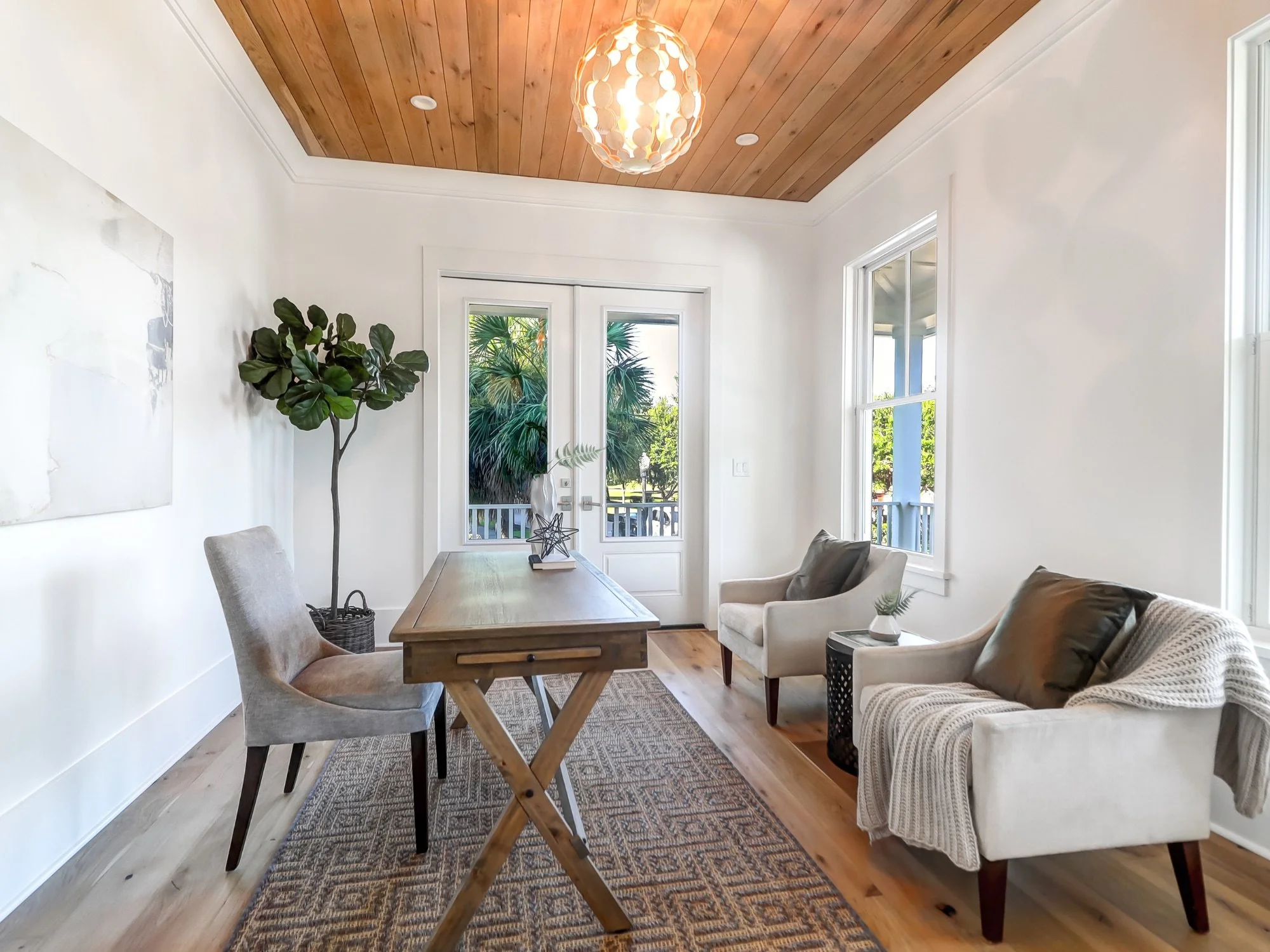
Lots of homes have rooms that need to do double duty. The trick is making sure the room still reads clearly to buyers.
For a guest room and office combo, use a smaller desk or even a wall-mounted one that doesn't take over the whole space. Keep the bedding neutral and minimal. Don't let the office stuff dominate - one desk is fine, but a full setup with filing cabinets and multiple monitors makes it look like the guest bed is an afterthought.
If you're doing bedroom plus office, decide which function is primary and stage for that. If it's a legal bedroom (for listing purposes), make sure it still looks like a bedroom first. A desk in the corner is fine. Turning it into a full home office that happens to have a bed shoved against the wall is not.
A room that's trying to be a bedroom, office, gym, and craft room all at once just looks messy. Pick one or two functions max.
Small Office Nooks
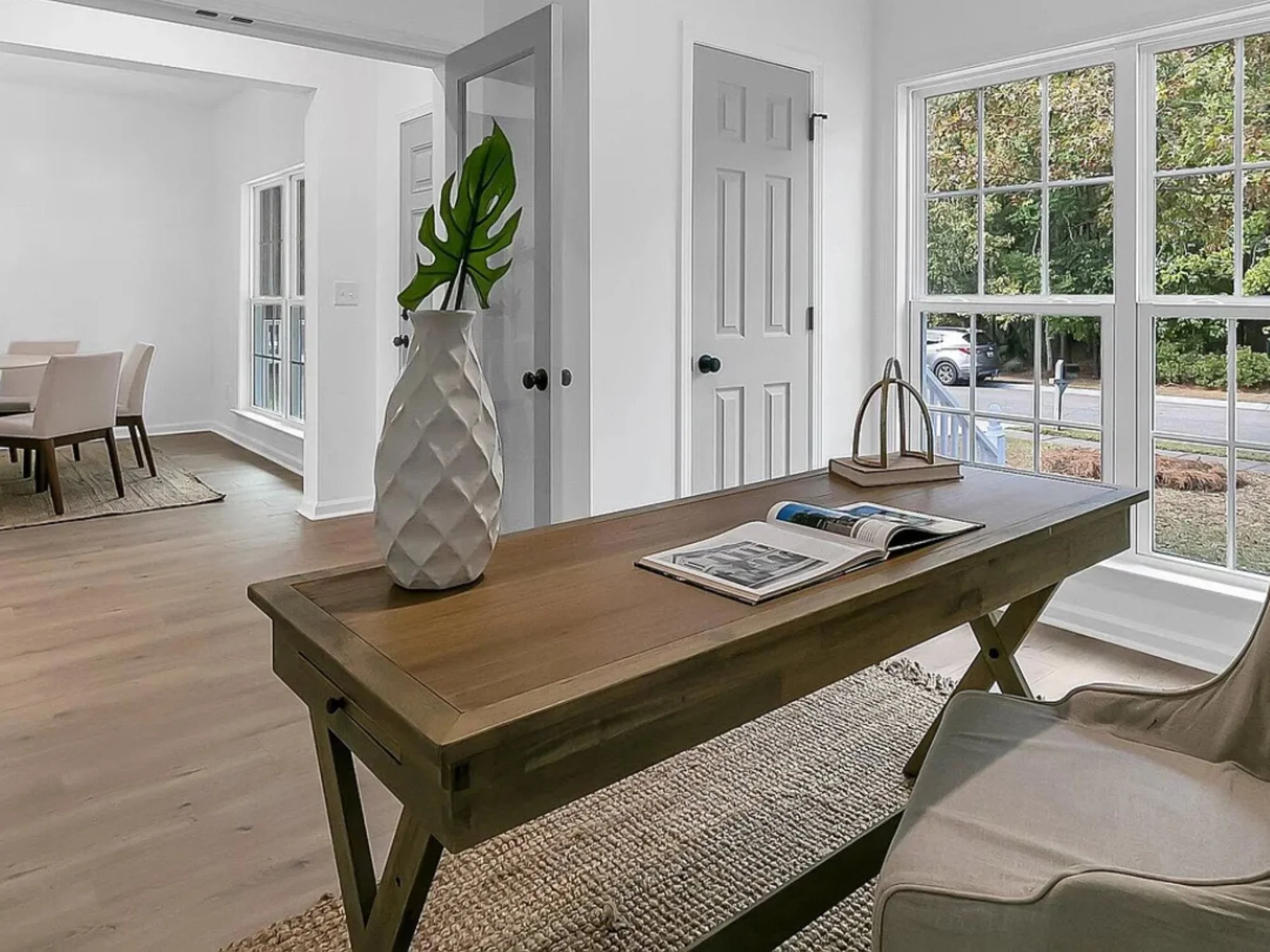
You don't need a full room to stage an office. A small nook, landing, or corner can work if you set it up right.
Use a narrow desk that doesn't block the walkway.
Add wall shelves for vertical storage instead of letting things sprawl across the floor.
Keep the decor minimal so it doesn't start to feel cramped. This is not the place for a bunch of knickknacks. And lighting is key! Add a desk lamp if the overhead light isn't cutting it.
Small offices work when they're clearly defined and not trying to do too much. One desk, one chair, good light. That's the formula.
Home Office Staging Mistakes to Skip
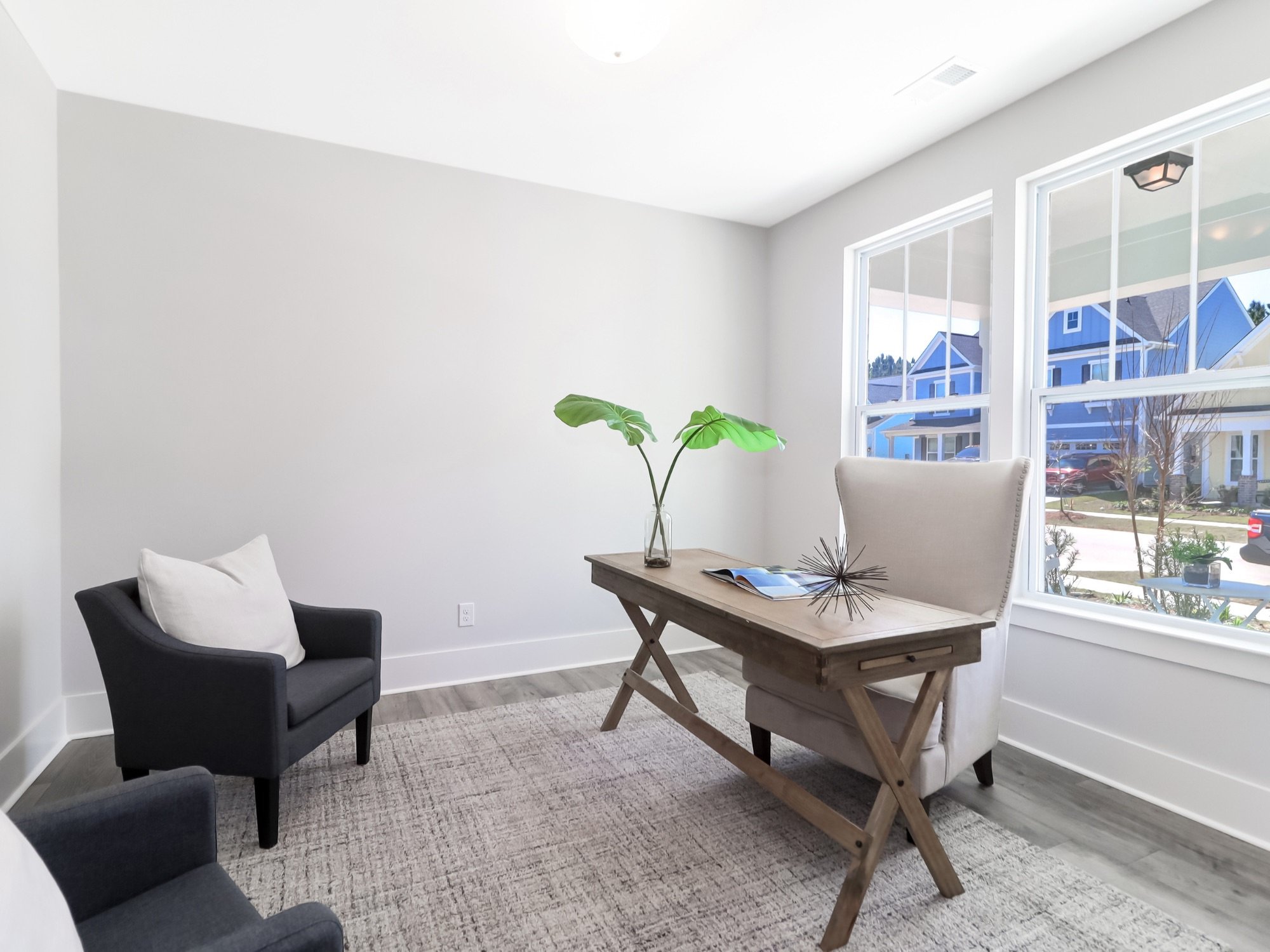
Here are the biggest mistakes we see:
Giant messy desk piled with papers
Cords everywhere, tangled and visible
Dark room with one dim bulb
Using the office as a catchall for storage, exercise equipment, or overflow toys
Overly personal or polarizing wall art
For more on what not to do, check out our post on home staging mistakes.
Before-Photos Office Checklist
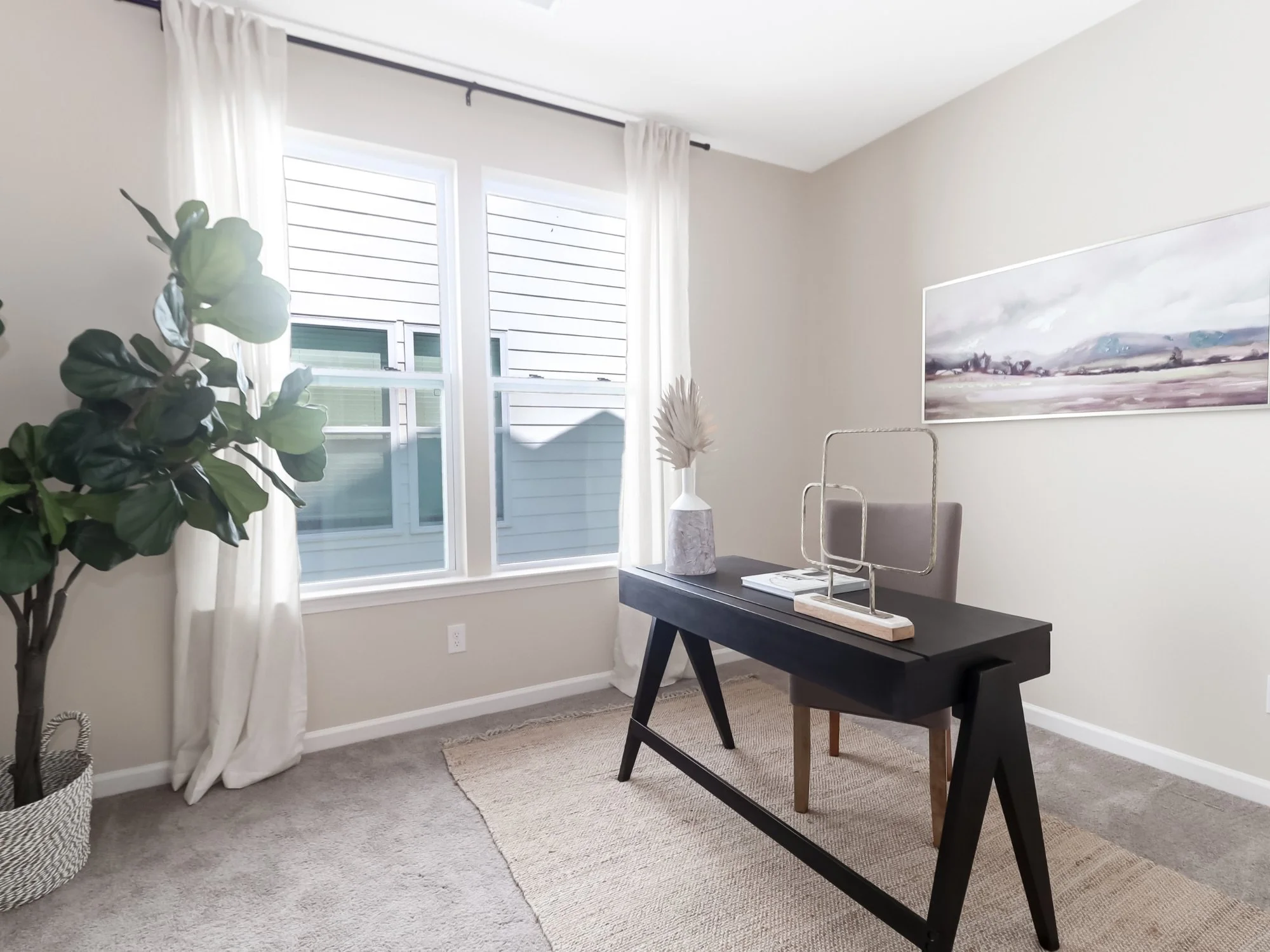
Use this before checklist before home staging photos are done and showings:
Home Office Staging Checklist:
Desk cleared and simply styled
Chair straightened and pulled in
Cords hidden or bundled
Floor clear, trash can empty
All lights on, blinds/curtains adjusted
No personal or client paperwork visible
Shelves organized, not overstuffed
When to Bring in a Pro for Office Staging
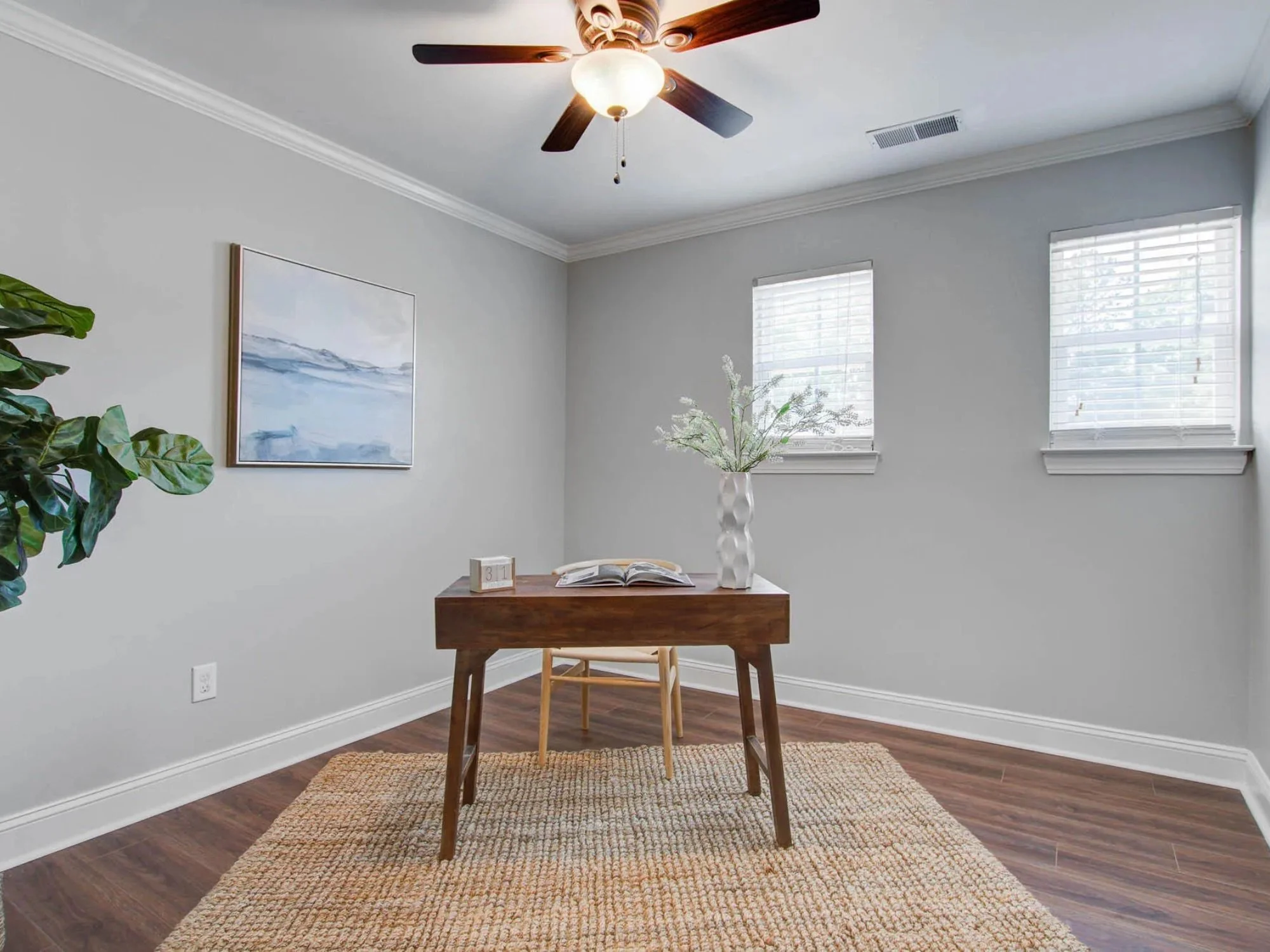
Sometimes staging an office on your own works great. But if the room is doing too many jobs (office/guest room/gym/storage) and you can't figure out how to simplify it, a professional can help.
At Southern Staging, our Charleston home staging services help homeowners turn chaotic multipurpose rooms into clear, buyer-friendly spaces. We know what works in this market and can walk through your home during a staging consultation to create an action plan.
Whether you need help with one room or want to stage your entire home, we're here. Check out our home staging services or learn more about our home staging process.
Office Staging That Sells
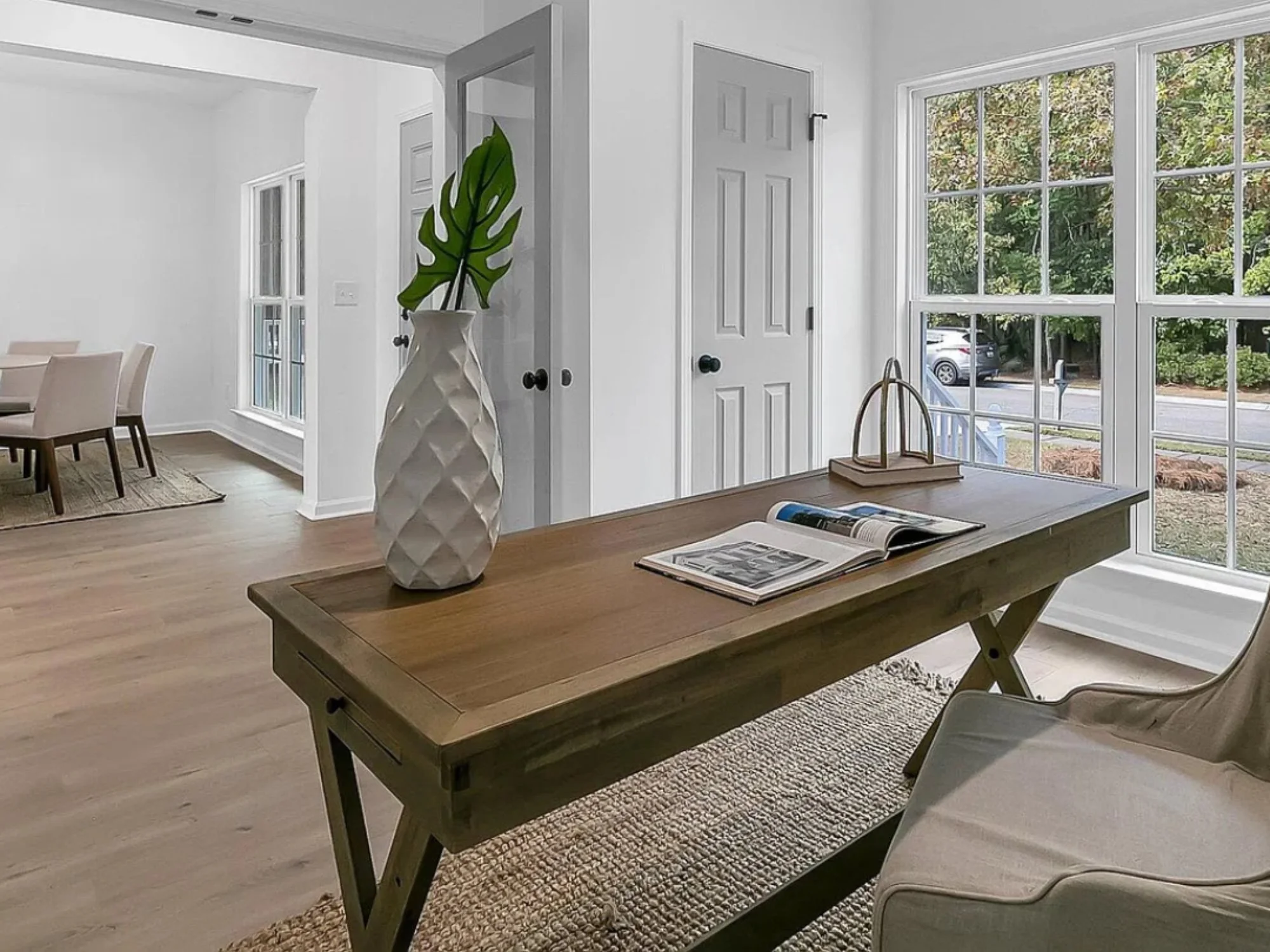
Staging a home office doesn't have to be complicated. Pick a spot with good light and some separation from the rest of the house. Clear the clutter, hide the cords, and style the desk simply. Use light paint colors and good lighting to make the space feel productive.
When your office looks clean and functional, buyers can picture themselves working there. And that makes your home more valuable to the huge number of people who need a dedicated workspace.
Need help with other rooms? Check out our guides on staging a kitchen, staging a bedroom, and living room staging. Or contact us to schedule a consultation.